How to stay physically and mentally healthy over summer

Summertime in Australia can be a magnificent time – beach holidays, joyous barbeques, crimson sunsets late in the evenings; an all round wonderful time of year. But with the stress of Christmas, the tensions of seeing family and the general busyness we can forego our most important asset we have – our wellbeing.

We’ve gathered our inspirational teachers together and asked them to give us a peek into their summer lives and how they managed to stay healthy – both physically and mentally – during this time.

Here’s how our staff love to stay healthy physically over summer:

This is the season to simply slow down, absorb the sun and enjoy nature’s bounty. adelaide summer activitiesSpend time outdoors – mother nature has a lot to offer us! Teresa
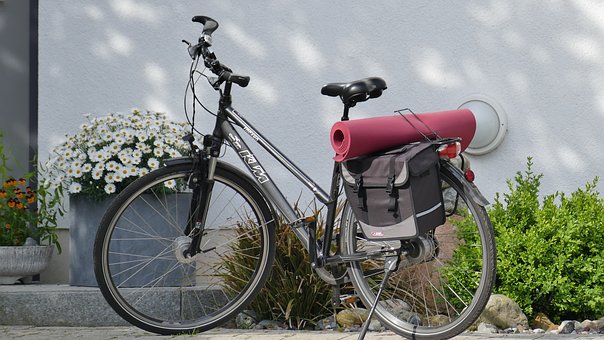
My home brewed kombucha is my personal life saver. Amy R

To keep healthy during this time of year, I love walking in the sunshine. Charlton

With the heat of the day it can be easier to stay indoors and get complacent about exercise. I like to walk early in the morning before the heat of the day, yoga (goes without saying) and paddle boarding. Being active releases endorphins the feel good hormones so you actually feel physically fitter and more energised. Staying hydrated is a big one over the summer. Nothing more refreshing than ice cold water with mint, cucumber and lemon which is a great antioxidant. Sue

Exercise early in the morning, make use of the warmer evenings for spending more beach yoga adelaidetime outside to relax, reconnect and to have fun. Eat lots of cooling foods such as watermelon, cucumber, mint, fennel, coriander, rose and aloe. Reducing the amount of alcohol you drink is also a great idea as it heats your blood and is rather dehydrating. Amy L
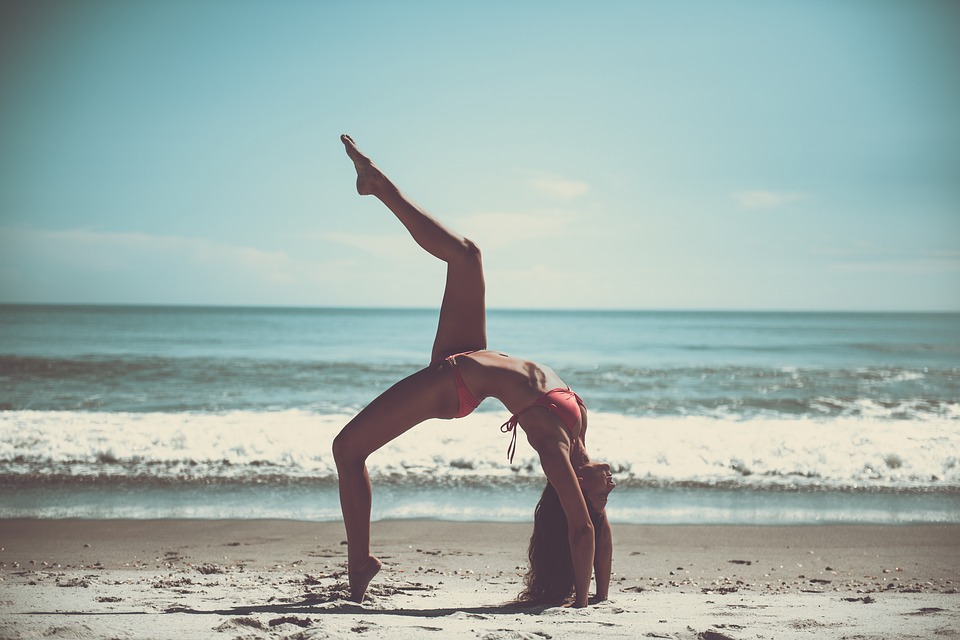
Here’s how our staff love to stay mentally healthy over summer:

Relax and breathe! Take time to slow down and enjoy not just every day, but each and every moment. Teresa

To keep my mind calm and stable during periods of stress and to balance out the highs and lows, I always turn to meditation. Charlton

Meditation, meditation and meditation! And it doesn’t necessarily have to be sitting. Meditation is simply single pointed focus so being mindful of each task can help keep that “monkey mind” at bay and as a result, reduce stress.

‘I won’t lie that a nice drop of red wine or a cool gin and tonic with a favorite magazine or good book gives me mental space.’ Sue

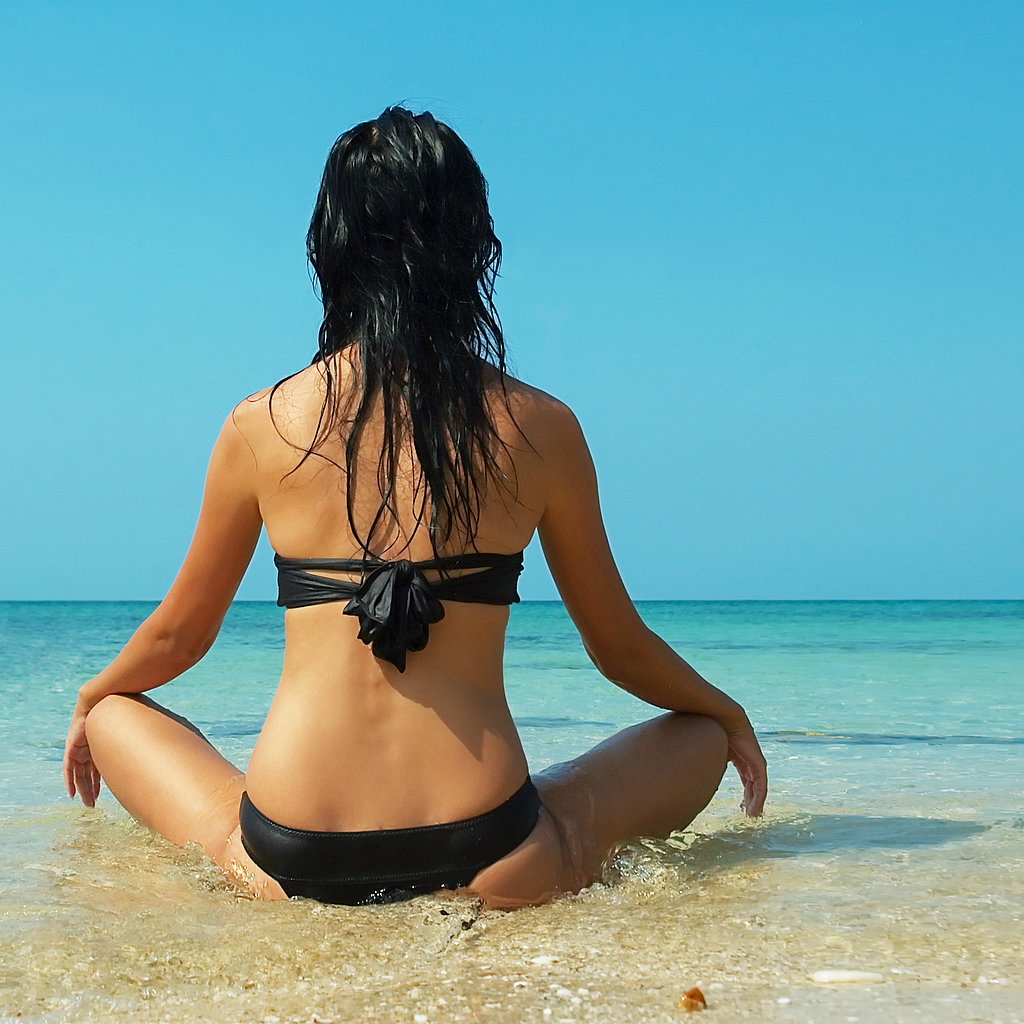
To keep as mentally healthy as possible, I like to get outdoors, preferably barefoot, adelaide summerheading to the beach, picnic in a park or a bush walk. Amy R

The main thing that I normally recommend is: do something small once each day.

This is a guideline that I live by for both my physical and mental wellbeing. We often get caught up in the idea of being active meaning that you have to do a workout for 90 minutes or meditation requiring us to sit perfectly still for half an hour.

While these are good too, time is precious and often fleeting – especially at this time of year. So we often need to practice the little things when we can. Wake up in the morning and doing a few rounds of Sun Salutes is just as valid as practicing a 75 minute class of hot yoga or going for a walk around the block will be enough to get some energy moving through your body.

If things seem to be getting too much (which they so often do), take just five minutes for yourself and do nothing but be still. You can sit in a chair, stand overlooking your backyard or just take the time to fully appreciate that morning cup of coffee, rather than drinking it as fast as you can and then rushing to get on with your day.

Sometimes we surprise ourselves and these few minutes encourage us to then do a little more and then… a little more again. Other times it’s enough and we can then move on, but those few moments will echo through the rest of our day. Simon

Yoga has been scientifically proven to be advantageous for your physical and mental health. We’re beginner friendly and very supportive. Try a class today.

Get to Know Your yogafusion – Manny Cebo

Meet the instructor – Mannyadelaide yoga

When did your yoga journey start? And why did you start?

My yoga journey began in the early 90s when I was in primary school. My mum bought me a book called A Child’s Garden of Yoga by Baba Hari Dass. It contained two meditations as well as an introduction to asana practice. I voice recorded Continue reading

Mudras

A mudra is a Hindu or Buddhist gesture or attitude that is devotional and emotional in prayer mudra adelaidenature, almost like symbolically saying to the Universe, ‘here, I’m declaring this to you’.

Mudras link pranic flow to the greater Universal energy, they expand chakras and can awaken Kundalini.

They are said to alter your mood and perception, bring about deep awarenesss and unite the layers of the physical, mental and emotional body together. They can be used in conjunction with asana, meditation and pranayama and even in classic Indian dance moves. There are five groups of mudras: hasta (hands), mana (head), kaya (postural), bandha (lock), adhara (perineal). The more commonly practised being hasta or hand mudras. Continue reading

From the Inside: a beginner’s experience

One of our beloved yogafusioners, Karina Natt, has been brave enough to share her experiences of becoming a student of hot yoga with us. Karina has been coming to the studio since 3 December 2013 and has never looked back!

yoga adelaide

Image via PopSugar

Letting go

I began with yogafusion during a personally and professionally emotional time and I was also suffering physically with a painful hip issue, so it was an interesting way to begin. Continue reading

Why You Should Never Bring Your Phone to Yoga

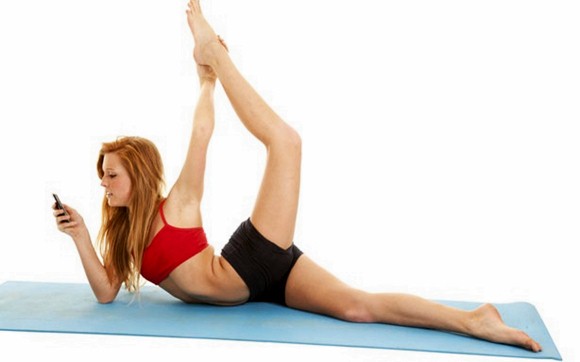
Be honest – what’s the first thing you do when you leave the tranquility of your yoga class? If you said check your phone, you’re not alone. At one time, we’re all guilty of this bliss breaking habit.  yoga phone

If you think about what your smart phone symbolises, what it holds, what it can do, the reach it has then everytime you pick up your phone within seconds of leaving the mat, you’re telling yourself that it’s IMPERATIVE that you connect back into that world.

The hour or two that you are in a yoga class is a dedication to the self. It’s a time when you are saying ‘yes self, I am giving you my all right now – all my focus, attention and effort’. And then we leave class and abruptedly retract that dedication via our actions.

Consider the benefits of holding that peace and stillness achieved in class or practise if it were to extend into every area of your life and not just for those minutes you spend on the mat. Imagine the richness that would permeate your job, time with family and friends and even your relaxation time alone. How often has your “yoga buzz” been destroyed by checking your phone after class and realising there is an urgent email that will cause you more work when you hit the office first thing in the morning? Or that there are people complaining on Facebook?

It would be hypocritical and remiss of us to demand you never connect with your phone but we’d like to remind you of the value of using it mindfully and allowing yourself time to have breaks away from it.

There are lots of benefits of having a mobile device that can connect to all areas in your life that lives in your pocket and sometimes, we’d be lost without them but notice how liberated you feel without having a phone to check or demand your attention. What other things fill that space where your attention is more free and available?

Allow the benefits of the class to be with you in its fullness, in your life (off the mat) and into your next experience. After class your energy channels are open and you may be more present to feelings and sensations. A distraction of the phone will ruthlessly pull you away from this. Often the very reason we seek external sources of distraction is because deep down we don’t wish to deal with what is rising and this isn’t just when it comes to the distraction of our phones.

‘Feelings come and go like clouds in a windy sky. Conscious breathing is my anchor.’ Thich Nhat Hanh

Dealing with anything that may be rising within, during or after class requires mindfulness in itself. You can apply this mindfulness by recognising and acknowledging whatever is there for you. Welcome and observe it without judgement and allow it to pass, almost as if you were watching a movie.

‘Mindfulness is simply being aware of what is happening right now without wishing it were different; enjoying the pleasant without holding on when it changes (which it will); being with the unpleasant without fearing it will always be this way (which it won’t),’ James Baraz

Why not experiment with leaving your phone at home next time you attend class, then it gives you the space between the end of class and arriving home to settle and enjoy that peace and stillness that you have worked hard to achieve. Or even better make an agreement with yourself to not turn your phone on until thirty minutes after class. If thirty minutes is too daunting, why not start with five and build up from there?

And don’t forget to share with us how you find this experiment!

When our pain is held by mindfulness it loses some of its strength… mindfulness recognizes what is there, and concentration allows you to be deeply present with whatever it is. Concentration is the ground ofhappiness. Thich Nhat Hanh

Did you miss our chakra series posts? Don’t forget that you can also meet our staff here.

Patanjali: the legend

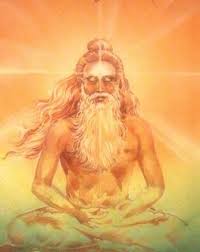
Legend has it that Patanjali compiled and codified the yoga sutras. The yoga sutras (sutra translating as thread) is considered the fundamental text for practising and living yoga and not just in the sense of asana but with regards to the full eight limbs. Those limbs being yama, niyama, asana, pranayama, pratyahara, dharana, dhyana and samadhi. Remember the recent post about one of the limbs, the yamas? yoga adelaide

Patanjali compiled 196 sutras or concise aphorisms that are essentially an ethical blueprint for living a moral life and incorporating the science of yoga into your life. Although no one is sure of the exact time when Patanjali lived and wrote down his sutras, it is estimated this humble physician (who became one of the world’s greatest and most well known sages) roamed India somewhere between 200 BC and 200 AD and that his birthplace was a celestial abode called Ilavrita-Varsha and his mother being Sati and father, Angiras (one of the ten sons of Brahma).

The verses are interconnected and all related together, hence their namesake of sutra (thread). ‘The scripture is regarded as the most precise and scientific text ever written on yoga,’ Four Chapters on Freedom.

He was said to be able to communicate since birth and was believed to be an incarnation of the mythical endless serpent, Ananta. The tradition runs that upon his birth he made known things past, present and future, showing the intellect and penetration of a sage while yet an infant. He married Lolupa, whom he found in the hollow of a tree on the north of Sumeru, and is said to have lived for many, many years. It was also claimed that he once reduced a group of Bhotabhandra residents to ashes by fire from his mouth after being insulted by them.

It was believed he had a variety of talents that included being a physician, dancer, medical intuitive, philosopher and grammarian. There are many uncertainties and skepticism shrouding what Patanjali actually achieved. Given his suspected parentage, he was an accomplished dancer that created classical traditions of dance styles still performed today in India and he is regarded as the patron saint of dance but it is a given in the yogic community that he was the one to package up yoga in the sutras we follow in most yoga lineages today. Although he did not create yoga he was instrumental in bringing it to the world.

Did you know? Patanjali can be roughly translated as ‘falling from heaven’, ‘offering sacred knowledge coming from the heart’ or ‘falling into folded hands’. Read more here.

Some people even purport that Patanjali also wrote a treatise on Ayurvedic medicine with a focus on diagnosis of disease and drugs, the structure and function of the human body and its fitness and its aesthetics.

Often called the “father of yoga”, there is still much mystery surrounding Patanjali and some facts and information have been misinterpreted or diluted over the years, not too dissimilar to that of another legend of man we may be familiar with: Jesus and his teachings.


Get to Know Your yogafusion – Pradeep Teotia

yoga adelaide

Meet the visiting instructor – Pradeep Teotia (Libra)

When did your yoga journey start? And why did you start?

I think I was six or seven years old!

Describe your first class?

Amazing, crazy and very energetic and peaceful.

adelaide yoga
What led you to decide to become a yoga instructor?

I wanted to share my passion with others.

What do you find most rewarding about being a yoga instructor?

Seeing change in people’s lives.

Describe where yoga has helped you overcome a challenge in life.

It has made me more aware!

Continue reading

Yamas – codes to live by

In Patanjjali’s (the father of yoga) yoga sutra there are eight limbs which comprise the eight yamas adelaidefolded pathway to enlightenment. These limbs are seen as steps or guides on the yogic pathway.

The first limb is Yamas, which are deemed the restraints or codes to live by in society. The yamas are complemented by the niyamas which are our personal codes of practise.

‘The Yamas comprise the “shall not” in our dealings with the external world and the niyamas comprise the “shall do” in our dealings with the inner world,’  Wikipedia.

The purpose of both the yamas and the niyamas is a redirecting of energies, helping us to reduce karma and always move towards clarity. They can all be practised at a psychological level as well as physical. They also provide a solid foundation to move through the rest of the yogic limbs.

The yamas are:

Ahimsa (non harming)

This can translate as harmlessness, removal of harmful intention and absence of enmity. This manifests as the cultivation and practise of non violent thoughts, words, actions or intentions towards the external world, one another, animals (and all living things) and especially towards the self.

‘…may all beings look at me with a friendly eye, may I do likewise, and may we look at each other with the eyes of a friend,’ Yajur Veda.

It is believed that practising ahimsa cultivates love, where the violence or harm is removed, it creates space for only love.

Ahimsa can take the form of practicing loving thoughts, not hurting animals, not judging others and even avoiding pushing yourself to the point of injury in your asana practise.

Satya (truthfulness)

Satya is the practise of incorporating the continuous truth and honesty at all levels of your life (even towards the self), which helps produce greater self reflection and develops integrity and overcome delusions. It translates as unchangeable or continuous truth.

It is the action of focussing on thoughts and speech that do good as opposed to do harm.

‘In most ways, the practice of satya is about restraint: about slowing down, filtering, carefully considering our words so that when we choose them, they are in harmony with the first yama, ahimsa. Patanjali and his major commentators state that no words can reflect truth unless they flow from the spirit of nonviolence,’ Yoga Journal.

The most wonderful gift you can give yourself is the truth.

Asteya (non stealing/non coveting)

Asteya focusses on taking something without permission, which isn’t just limited to physical goods. This can also extend into taking someone’s time, ideas or space and even hoarding unnecessary possessions.

Here are some great practical ways of practising asteya.

‘Asteya also includes the concept that you should try to be content with what comes to you by honest means,’ Yoga 108.

Bramacharya (chastity)

This is the practise of managing sexual energy and whilst it may not manifest in the form of abstinence, it can be the practise of mindful relations and adhering to ahimsa towards the self and others. Some yogis choose to embrace this yama as self imposed celibacy.

The belief around this is that celibacy is beneficial in reserving prana, which encourages or is required for enlightenment. Yogis also believe that bramacharya can lead to physical and mental wellness and clarity, good health and inner peace and clarity.

It can also be considered the control of the senses.

‘According to the Yoga Sutras, the end-result or fruit of Brahmacharya practised to perfection is unbounded energy and vitality.’ Wikipedia

 Aparigraha (non possessiveness)

This is the practise of greedlesness, non attachment to material and impermanent things which is said to create a pathway for a mindset of flowing abundance by letting go of the desire of things. With the removal of neediness and desire, comes contentment and peace.

Anything that can be lost, we shouldn’t be attached to but rather we should act from and value those things that can never truly be lost, such as love, ‘…the work you put into improving yourself, quieting your mind, learning how to behave in a moral and ethical manner, and learning how to act in accordance with your true inner self is something that can never be lost,’ Instant Good Karma.

‘The yogi feels that the collection or hoarding of things implies a lack of faith in God or himself to provide for his future,’ Light on Yoga, BKS Iyengar, page 35.

Addtionally, there are other yamas which are not as well known or as common. They are Daya (compassion), Arjava (rectitude), Kshama (forebearance/patience), Dhriti (steadiness), Mita-Ahara (moderate eating).

Stay tuned for our post about Niyamas.

Read our What Does Yoga Actually Mean? post.

Get to Know Your yogafusion – Simon Michelmore

Meet the instructor – Simon Michelmore

What do you find most rewarding about being a yoga instructor? And most challenging? Simon Michelmore

Teaching a class, or even just preparing to teach, challenges you to ask yourself a lot of questions – ones which are often difficult. Am I being genuine? Am I being present with the class, or simply “going through the motions?” And countless others. They can be very similar to questions that you would ask yourself during your own practise, but they now become directed outwards as you want to strive for each and every student to be able to find what it is that they need.

In the process of trying to be sincere, it also means that you have to be vulnerable in a very public way. I know that when I go to practice in a class, the last thing I want is the teacher to be placing themselves on a pedestal and preaching from on high to me. Instead I believe that we simply desire for them to relate to us as one human being to another.

In attempting to do that you end up running head first into a bunch of your insecurities and confronting someone that can be either your best friend or your worst enemy – yourself. A person who knows all of your secret fears and regrets and, given a chance, can easily use them against you. The challenge for me is to try and let go of those fears and just be open for people to read, imperfections and all.

As a teacher one of the most rewarding aspects is when you can see students directly challenging their own fears and, after the class is over, they walk out of the room as though they’re just that little bit lighter.

What is your favourite yoga pose and why?

Parivitta Trikonasana. One of the core postures that we teach, but often the most under appreciated. To really get “into” the posture, it requires you to focus on every single part of the body from the feet and legs, right through the hips and spine, and into the head and fingers.

Describe your first class?

Weirdly familiar, as it had echoes of various martial arts, but at the same time different enough that I was thrown completely out of my comfort zone. Rather than being the rather constant movement that I’d experienced with most forms of exercise, with a lot of fast action and dynamism, you were encouraged to find the pose and then be still with it. It required that I put aside every assumption I’d unknowingly made before and moved me – little by little – to be quiet.


When did your yoga journey start? And why did you start?


Late 2001. I came from a martial arts background and, after our school disbanded, I’d been looking for something along similar lines for several years. When several friends talk about their yoga practise, I become intrigued enough to go a beginners’ course at a studio in town.

After the initial eight weeks of the course were up and I realised that my weeks felt incomplete if I wasn’t attending a few classes, I was hooked and knew that I’d found what I’d been searching for!

What led you to decide to become a yoga instructor?

It was more of an evolutionary process, as opposed to a revolutionary one. I’d be practicing for over a decade, with the regularity of my practise growing each week, but I had never actually considered my practise to be anything other than “for me.” Once I started at yogafusion, Sue encouraged me to think about going to teacher training and – honestly – at first I thought she was just being supportive and telling me I was “doing okay” in a diplomatic, roundabout way.

When I realised that she was quite serious, I took about a year to think about it and decided that, at the very least, it would be a once in life experience, even if I decided to not actually move into teaching.

Once the course was over, however, there wasn’t a shred of doubt left that I wanted to be in the room and guiding people through their practise.

What is your greatest fear?

For some reason I have a quite irrational fear of deep water (I put it down to seeing Jaws to many times when I was about five years old). Despite the fact that I enjoying surfing; am a competent swimmer; and am regularly out in the ocean, I always feel uneasy when I can’t see the seafloor beneath me.

Describe where yoga has helped you overcome a challenge in life:

Everybody has their own personal hurdles in life to overcome; for me a large one has been learning to cope with depression, which I was diagnosed with in my early twenties.

I started yoga with the idea of the physical practise helping me deal with it, as it would be an excellent form of exercise. Although that was certainly important, it didn’t take me too long to discover that the real benefits came not from how deep I could go into Trikonasana or if I could do the full splits, but questioning the very assumption of why I believed I needed to be “deeper into the posture” in the first place.

What else do you do in life, aside from yoga? Eg, job, hobbies, lifestyle, creative outlets

My hobbies have a habit of starting off being casual interests and then become larger and larger parts of my life before I know it. As a result I dabbled with computer programming as a teenager, and it’s now what I do fulltime. I was interested in cinema from a fairly young age, which led to me being in the film and TV industries for several years, where I worked on various feature films, documentaries and short films.

Outside of “work,” I like finding the balance between seeing friends and family often, but also setting aside some time for myself and enjoy something quiet.

What is the yoga pose that challenges you the most and why?

One legged pigeon – Eka Pada Kapotasana. If you want to challenge yourself to find stillness amidst difficulty, this might be the pose that someone should try. If anything challenging – mentally or emotionally – is occurring in your life, then this will bring it right to the front of your conciousness. The exercise is then to stay with it, despite every instinct of the ego telling you to do otherwise, and just let it be.

Describe your lifestyle and eating habits:

I like to be active – even if it’s just a simple walk with my dog – and eat well. But I do have to make sure that my house is devoid of chocolate or anything sweet, or they generally don’t last more than a few hours.

If you were a supermarket item, what would you be? Why?

Fish oil. Nobody really knows what it does, but apparently it’s really good for you, so … why not?

If you could only instil one thing from yoga to your students, what would it be?

Take on board the essential, strip out the unnecessary and add what is uniquely your own.

What is your favourite thing in life? Besides yoga, of course!

Friends, a film and good bottle of red wine. Preferably with chocolate (type irrelevant).

How would you cure world hunger if you had the chance?

Give every world leader a conscience. Do that and the problems of the globe would be solved in a matter of days.

Do you have a life strategy or a personal philosophy that rarely fails you? simon michelmore

I find a lot of life seems to be dictated by the idea of ‘Thou shalt not.’ Instead, I like to approach everything with the idea of ‘Thou shalt.’

Tell me something that not many people know about you?

I’m quite the geek … actually, people probably already do know that!


Read up on our other staff members here.

Get to Know Your yogafusion – Sue Czuchwicki

yogafusion

Meet the Director/Principal Teacher – Sue Czuchwicki  (Taurus)


When did your yoga journey start? And why did you start?

Sixteen years ago – to complement triathlon and cycling training and to get a good stretch, relaxation and grounding. My first class was a community class run by the local pharmacy in Bendigo, Victoria. The teacher (Sally Downes) was warm and friendly and had a special disposition about her that I was really drawn to and no other past coach/trainer had. The class itself was a nice mix of physical work and relaxation and I remember having the best night’s sleep after that first class. I knew then that there was something in this practise; something deep.

What led you to decide to become a yoga instructor?

Nothing in particular led me to it as it intuitively just felt right. Whilst initially the benefits of practicing yoga were of a physical nature I was amazed how soon yoga began to extend beyond the mat and into my daily life and relationships.

Yoga brought a calming focus to my life, a greater awareness when facing life’s challenges and I wanted to share what I was receiving with others. It was fairly soon after I had started yoga classes that I had already made enquiries to Sally. Interestingly, she said that out of all the students in her classes, she had a feeling I would be the one asking her about teacher training. Maybe it’s Karma?

What do you find most rewarding about being a yoga instructor? And most challenging?

Firstly I would like to make the distinction between yoga instructor and yoga ”teacher”. I believe that yoga is a science, a philosophy and a way of life. An instructor is someone who details physical postures whereas a “teacher” is someone who uses the postures to stimulate awareness and deeper understanding of yoga science. Having said that it doesn’t mean I’m not instructional in my teaching but for me “instructor” doesn’t involve inspiration or understanding. An instructor tells you what to do but a teacher helps you understand why you are doing it. Continue reading